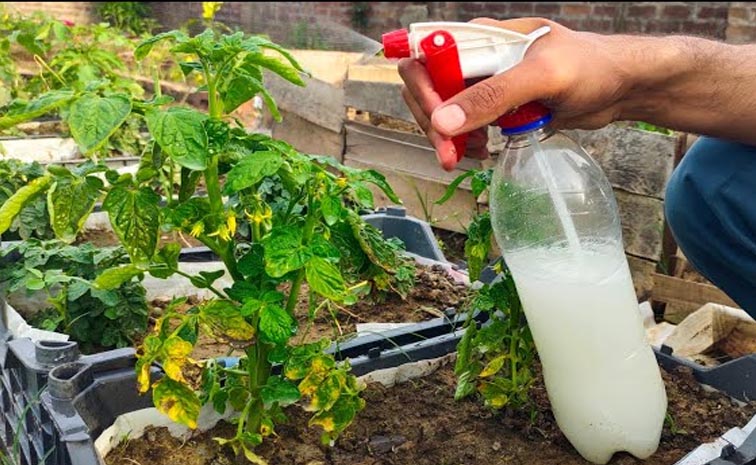
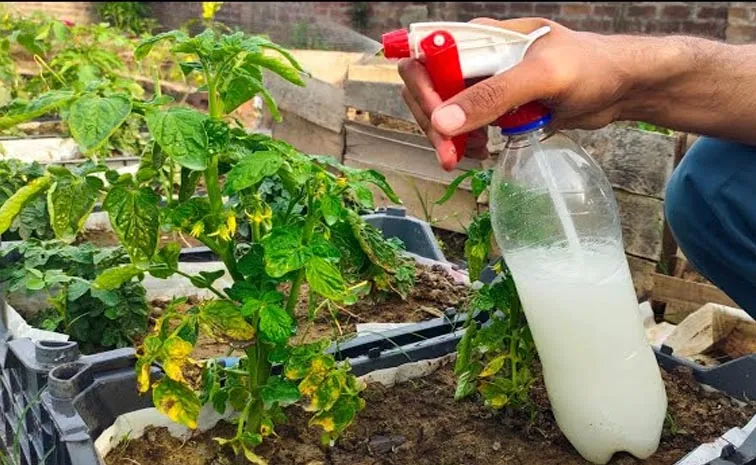
Using milk in sugarcane / backyard gardens is an excellent nutrient for plants. There are many advantages as well as some disadvantages. Better results can be achieved in gardening by using milk diluted with water instead of directly.
1. Some amino acids and salts present in milk are effective in preventing fungal diseases like powdery mildew that infects plants in sugarcane gardens.
2. Milk is rich in calcium. It helps plant tissue to grow stronger. It effectively prevents the disease of 'blossom end rot' (the lower part of pods turning black and rotting) especially in tomato, chilli and okra plants. At this stage calcium deficiency is completely eliminated if sprinkled on the soil and leaves once a week.
3. Proteins, vitamins and mineral salts present in milk increase the internal immunity of plants.
4. Applying milk to the soil causes the beneficial microorganisms in the soil to grow rapidly and the soil becomes fertile.
5. Spraying the milk mixture on the leaves increases the chlorophyll (greenness) and makes the leaves glow healthy.
6. If milk is used in large quantities or poured into soil without diluting it properly, it rots and gives off a strong stench. This problem is more troublesome in sugarcane plantations.
Read this:Drought check with hydrogels!
7. Ants, flies and other harmful insects are attracted towards plants due to sugar (lactose) and fatty substances in milk.
8. If milk is used directly or in large quantities, a thick fatty layer forms on the leaves. Due to this, the plants cannot take air and sunlight properly, photosynthesis stops and the leaves turn yellow and fall off.
9. If there is too much milk in the soil, there is a risk of fungus growth and rotting of the roots.
10. Never pour milk directly on plants. Mix 1 part milk to 9 parts water (1:9 ratio) and dilute it well.
Read: Tigers
11. Pour this mixture in a spray bottle and spray it on the leaves once in 2 weeks, especially in the morning before the sun comes in.
12. Spoiled milk or milk left at home can also be mixed with water in this way.
13. Applying milk to vegetable plants like tomato, chilli, eggplant reduces the coating. The pods grow better without rotting.
14. Lightly spraying the leaves 20-30 days after planting will help the leaves grow healthy and green without wilting.
15. It is very important to spray the milk mixture during the budding and coating stage. The calcium and amino acids in milk reduce plaque shedding and increase sebum production.
Kolli Krishna Kumari,
Admin, Guntur District
Midde Tola Team
Mobile: 94906 02366